

HTHP Symposium 2026
The High-Temperature Heat Pump Symposium 2026 was held on 21-22 January in Copenhagen, Denmark.
High-Temperature Heat Pump Symposium 2026
- A sector ready to scale
The High‑Temperature Heat Pump Symposium 2026 confirmed that the shift to electrified industrial heat is no longer a distant vision. It has begun. Held on 21–22 January 2026 at Bella Center Copenhagen, Denmark, the fifth edition of the symposium gathered more than 530 participants from across the global value chain. Technology providers, industrial end‑users, researchers, consultants, and policymakers met to discuss how high‑temperature heat pumps can move from pioneering projects to large‑scale deployment.
We are living in turbulent times, where energy and industrial policy are shaped as much by competitiveness, resilience, and energy security as by climate targets. Volatile fuel prices, geopolitical tensions, and pressure on global value chains have moved secure, affordable, low‑carbon heat from an environmental issue to a strategic priority. Against this backdrop, the symposium showcased how rapidly the HTHP sector is evolving and how electrification and energy efficiency are becoming core pillars of future industrial production.
Across two days, the programme featured more than 78 oral presentations, over 40 poster presentations alongside 10 scholarship posters, two panel debates, three sector‑focused collaboration workshops, and an exhibition with 36 companies and organisations.
Beyond the sector sessions, the symposium hosted multiple parallel technical tracks covering topics such as heat pump integration, technology benchmarking and system design, steam systems, large‑scale testing and demonstration, heat‑driven systems, digitalisation and advanced control, and advanced manufacturing methods, and much more. These sessions provided a rich foundation of technical knowledge and real‑world case studies for participants to draw on in their daily work.
The atmosphere was characterised by openness, realism, and strong optimism: the technology is mature, the need is urgent, and frontrunners are already demonstrating that industrial heat can be electrified at scale.
Explore the many presentations in the Book of Presentations - coming soon
The Brian Elmegaard High‑Temperature Heat Pump Scholarship
An important moment in the programme was the presentation of the Brian Elmegaard High-Temperature Heat Pump Scholarship, established in memory of Professor Brian Elmegaard and his pioneering contributions to the field. The scholarship supports young researchers and practitioners who are advancing high-temperature heat pump technology and its industrial applications.
This year’s scholarship recipients presented their work in a dedicated poster session, contributing 10 high‑quality posters to the scientific programme. The scholarship not only honours an influential figure in the community but also underlines the commitment of the symposium to nurturing the next generation of experts who will drive industrial decarbonisation forward.
Read more about the scholarship and explore the 10 winning posters: Brian Elmegaard Scholarship Recipients
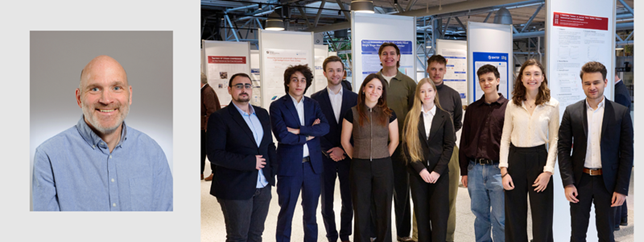
Professor Brian Elmegaard The ten scholarship recipients, from left: Asencio Tevar-Rufete, Andrea Fiori,
Jonas Klauke, Virginia Natonek, William Flood, Sonja Pekonen,
Moritz Schmidberger, Vinzent Querner, Isabella Elbe, and Max Hönig.
Keynote speakers - moving towards real‑world application
The opening session set the tone for this year’s symposium. Benjamin Zühlsdorf from Danish Technological Institute and co-organiser of the HTHP Symposium welcomed the more than 530 participants and outlined how the role of high-temperature heat pumps is shaped by today’s changing energy narratives: decarbonisation now goes hand in hand with competitiveness, resilience, and reduced dependence on imported fossil fuels.
The keynote contributions by Elisa Asmelash - IEA, Dave Jones - Ember, Martin Pihl Andersen - Danish Technological Institute, Jonas Kjær Jensen - DTU, Florian Schlosser - University of Paderborn, and Rowan Steele - European Commission / DG CLIMA provided a comprehensive overview of where the sector stands today and what to expect in the coming years. Together, they highlighted several overarching messages:
- A new strategic relevance of energy efficiency and electrification in industry. Secure, affordable, low‑carbon heat is becoming a board‑level issue. High-temperature heat pumps are now recognised as a central pillar in pathways to net zero, while also strengthening industrial resilience and competitiveness.
- Rapid technological progress. Technical boundaries are being pushed towards higher temperatures and larger capacities. Advanced components and complete systems have been optimised, tested, and demonstrated in a wide range of processes, from utility‑scale district heating solutions to process‑integrated concepts for specific unit operations.
- From prototypes to standardised products. The portfolio of commercially available systems ready for replication is growing and technologies are increasingly being standardised and prepared for large‑scale deployment. Reliability, validation, and clear performance documentation are emerging as key enablers in the next 2 to 3 years.
- Stronger framework conditions. The electro‑tech revolution, new funding mechanisms such as upcoming EU heat auctions, evolving regulations and carbon pricing, as well as corporate sustainability commitments across supply chains are all starting to create real momentum for deployment.
The shared consensus across the keynotes and audience was clear: high‑temperature heat pumps can make a real difference, and the rollout has started. To fully unlock the potential, however, the sector must work even more closely together across disciplines, organisations, and borders to turn ambition and technical potential into large‑scale, reliable implementation.

Benjamin Zühlsdorf Elisa Asmelash Dave Jones Martin Pihl Andersen
Keynote speakers 2026
Debating drivers, frameworks, and the road ahead
The two panel debates "What's driving the market?" and "Looking ahead - Bringing technologies into application" brought together experts from across the value chain to explore both what is driving the industrial heat pump market today and what must happen to bring technologies into large‑scale application.
Representatives from international organisations, policymakers, industrial end‑users, system suppliers, and research institutions highlighted how climate commitments, corporate net‑zero strategies, attractive operating costs, and the quest for competitiveness and resilience are all strengthening the business case for high‑temperature heat pumps. At the same time, they underlined the crucial role of national and EU support schemes, clear long‑term policy signals, and well‑designed market rules in de‑risking first‑of‑a‑kind projects and accelerating uptake.
Looking ahead, the debates converged on several key priorities: closer collaboration between end‑users, integrators, and component manufacturers; robust design, validation, and documentation to build trust in performance and reliability; careful consideration of integration concepts, operating strategies, and flexibility; and clear roadmaps and targets within companies and sectors to guide investments. Taken together, the discussions made it clear that the shift to high‑temperature heat pumps has begun - and will not stop - but that the coming years will be decisive for turning today’s momentum into large‑scale, real‑world deployment.

Sector collaborations and value‑chain dialogue
A new element in the 2026 programme was a set of three sector collaboration workshops, focusing on textiles, chemicals, and pulp & paper. Each workshop brought together industrial end‑users, technology suppliers, researchers, and policymakers to explore how high-temperature heat pumps can be integrated into specific processes and value chains.
The participants discussed typical temperature levels, load profiles, and integration opportunities, as well as practical barriers related to investment cycles, risk perception, and organisational capabilities. The aim of the workshops was to create concrete ideas for pilot projects, joint R&D activities, and roadmap development within each sector.
Read more: Sector Collaboration Workshops
Showcasing commercial HTHP solutions and market-ready innovation
The exhibition area at HTHP Symposium 2026 brought together 36 exhibitors from around the world, representing the full value chain of high‑temperature heat pump deployment. Component manufacturers, system suppliers, engineering companies, software providers, and research organisations showcased their latest solutions and project experiences.
For participants, the exhibition served as a dynamic marketplace for ideas and collaboration, and they could explore commercially available HTHP systems, emerging technologies, integration concepts, and supporting services such as engineering design, digital tools, and financing models.
Throughout the two days of the symposium, the exhibition and networking areas were buzzing with activity, reflecting a sector characterised by strong ambition, growing capabilities, and a clear sense of shared purpose.
For more details, please visit our dedicated page for Exhibitors 2026

From momentum to large‑scale impact
As the High‑Temperature Heat Pump Symposium 2026 came to a close, one overarching message stood out: high‑temperature heat pumps are moving rapidly from vision to commercial reality. Strong and improving framework conditions, a broad and increasingly standardised technology portfolio, and a committed value chain are now in place. To turn this momentum into large‑scale decarbonisation of industrial heat, the sector must continue to:
- Collaborate closely across the value chain and across borders
- Prioritise reliability, validation, and transparent performance data
- Use national and international support schemes strategically to de‑risk early projects
- Translate ambition into clear targets, roadmaps, and investment decisions in companies and sectors.
The High‑Temperature Heat Pump Symposium 2026 demonstrated that the community is ready for this challenge. With enthusiasm, expertise, and a strong willingness to share knowledge, the foundations are set for considerable progress in industrial heat pumps over the coming years.